

SSgt Waller
-
Posts
577 -
Joined
-
Last visited
-
Days Won
53
Content Type
Profiles
Forums
Events
Everything posted by SSgt Waller
-
UN Authorises Guinea Intervention as US Launches Independent Military Operation Following Televised Executions The United Nations Security Council has authorised a multinational peace enforcement mission in Guinea following a dramatic escalation in the country's civil war, while the United States has announced a separate military intervention after the military junta executed 17 American citizens during a nationally televised broadcast.The emergency resolution, adopted after an overnight session of the Security Council, comes after weeks of worsening violence, ethnic persecution, the collapse of humanitarian access, and the detention of foreign aid workers accused by the Transitional Military Council of espionage. The immediate catalyst for the vote was the junta's decision to carry out the executions despite widespread international appeals for clemency. The broadcast, aired on state television, showed the execution of 17 US nationals whom the Government of National Salvation had accused of espionage and collaboration with foreign intelligence services. The allegations have been widely dismissed by Western governments, which maintain those killed were humanitarian workers and civilian contractors unlawfully detained following the junta's seizure of power. The executions prompted immediate condemnation from governments around the world and transformed what had been an increasingly urgent humanitarian crisis into a major international security crisis. The UN resolution authorises the deployment of the United Nations Mission in Guinea (UNMIG) under Chapter VII authority, granting peacekeepers a mandate to protect civilians, restore humanitarian access, secure key infrastructure and use force where necessary to prevent further atrocities. The initial force package will consist of approximately 5,900 personnel drawn from twelve contributing nations: Morocco, Livonia, Venezuela, the Horizon Islands, Kosovo, Mali, Burkina Faso, Canada, Belgium, Ireland, the United Kingdom and France. Canadian Lieutenant General Marc Deslauriers has been appointed Force Commander, with advance elements expected to begin deploying within days. Canadian Lieutenant General Marc Deslauriers during an interview in Angola (UNAVEM III 1996) United States Announces Independent Intervention Within hours of the executions, President Moore addressed the nation from the White House, announcing that the United States had authorised an independent military operation against the Guinean junta. Describing the televised execution of 17 American citizens as "an act of war," Moore accused the Government of National Salvation of murdering unarmed aid workers, missionaries, engineers and civilian contractors in what he called "a state-sanctioned execution carried out by uniformed officers on the orders of the men who occupy the presidential palace." The President argued that Washington had exercised restraint following the junta's seizure of power. He also accused the junta of orchestrating an earlier attack on the US consulate and interfering with the evacuation of American personnel during the crisis. Invoking Article 51 of the United Nations Charter, the White House stated that the United States was exercising its inherent right of self-defence following what it described as an armed attack by the Guinean state against American citizens. Administration officials said the operation would target those responsible for the executions, protect remaining foreign nationals and prevent further atrocities. Pentagon officials declined to discuss operational details but confirmed that US forces had commenced operations. While Washington stressed that the intervention would remain outside the UN chain of command, officials said military planners were coordinating with the newly authorised UN mission to avoid operational conflicts. A Three-Sided Conflict The intervention comes as Guinea's conflict continues to fragment. Government forces loyal to the Transitional Military Council retain control of major population centres and military installations but face opposition from multiple armed factions. Anti-government forces are reportedly divided between Western-aligned groups seeking political transition and extremist factions linked to the International Salafi-State movement (ISSP), which intelligence officials believe has expanded southward from Mali, exploiting the breakdown of state authority. The arrival of foreign forces is expected to further complicate an already fragmented battlefield, with analysts warning that UN peacekeepers may encounter resistance from government forces, anti-government militias and extremist organisations operating independently of either side. Pictures of Morrocan Mechanized Forces seen painting their equipment in UN liveries have been circulating on social media the day after the announcement. A Conflict Enters a New Phase UN officials acknowledge that assembling and deploying the multinational force will require several days as troops from twelve contributing nations begin arriving in theatre. The United States, however, has already begun combat operations under its own command, fundamentally changing the trajectory of the conflict. Unlike the UN mission, which is mandated to protect civilians and restore stability under Chapter VII of the UN Charter, Washington maintains that its intervention is a separate operation conducted under Article 51, citing the inherent right of self-defence after the televised execution of 17 American citizens. For many diplomats, the executions marked the point at which Guinea's civil war ceased to be solely an internal conflict. What began as a humanitarian crisis has rapidly evolved into an international military intervention, with both UN peace enforcement forces and US combat operations now underway. The coming days are likely to determine not only the fate of Guinea's ruling junta, but the future stability of the wider West African region. Zak Wright Grand Central Times
-
Guinea: The War Within a War — How ISSP Exploits the Collapse of State Authority The attack on the Radisson Blu Hotel in Al Safyrah is not merely another episode in Guinea’s accelerating civil war. It is a symptom of a deeper transformation: the fragmentation of political violence itself. As government forces, armed opposition movements and foreign actors compete for influence over the future of the country, a third force has emerged from the margins of the conflict — one for which chaos is not a consequence of war, but its objective. According to local authorities and witnesses, fighters affiliated with the International Salafi-State (ISSP) launched a coordinated assault against the hotel, a location frequented by foreign visitors, business representatives and civilians seeking temporary security amid Guinea’s worsening instability. The attack began with gunfire inside the building before escalating into a prolonged confrontation between the militants and government forces. Civilians trapped inside the hotel were caught in the violence as security units attempted to regain control of the building. Several hours later, after a floor-by-floor clearance operation, the attackers were killed and the site was secured. The assault left dozens dead and wounded, although the exact toll remains disputed. Yet beyond the immediate human cost, the attack reveals the changing nature of Guinea’s conflict: a domestic political crisis has become an arena in which international rivalries, ethnic tensions and transnational jihadist ambitions intersect. The Fragmentation of Guinea’s War For much of the conflict, international attention has focused on the confrontation between the military government that seized power and armed movements seeking to remove it. The junta has presented itself as the defender of national sovereignty against foreign interference. Its opponents accuse it of authoritarianism, ethnic persecution and the destruction of democratic institutions. External powers have increasingly become involved, either politically, financially or, according to competing accusations, militarily. But ISSP does not fit neatly into this confrontation. Unlike the factions fighting for control of Guinea’s political future, ISSP benefits from the absence of political resolution. Its strength lies not in governing territory effectively, but in exploiting insecurity: attacking symbols of state authority, undermining public confidence and provoking responses that deepen existing divisions. The attack in Al Safyrah follows a familiar pattern observed in other conflicts where extremist organisations have expanded amid institutional collapse. Rather than seeking immediate control of the state, such groups aim to demonstrate that no authority — government, opposition or international actor — can guarantee security. A Target Beyond the Hotel The choice of the Radisson Blu was not accidental. Hotels, airports and humanitarian facilities occupy a unique position in modern conflicts. They are simultaneously civilian spaces and symbols of international presence. By attacking such locations, armed groups send multiple messages at once: to governments, foreign actors, local populations and potential recruits. The objective is not only to kill. It is to create the perception that normal life has become impossible. For residents of Al Safyrah, the attack reinforced a growing sense that the conflict is escaping the control of all parties involved. The distinction between battlefield and civilian space has become increasingly blurred, leaving ordinary citizens exposed to violence from competing armed actors. The International Dilemma The attack comes as the international community prepares a major intervention in Guinea, with the United Nations considering the deployment of a multinational force tasked with protecting civilians, restoring humanitarian access and preventing further atrocities. However, the emergence of ISSP complicates any potential intervention. A mission originally conceived around stabilising a political conflict now faces the additional challenge of countering an extremist movement operating in the spaces created by state collapse. This raises fundamental questions about the nature of international involvement. A military intervention may succeed in securing airports, government districts and humanitarian corridors. It may protect civilians in the short term. But the experience of previous conflicts suggests that defeating extremist movements requires more than military pressure. ISSP thrives where institutions fail, where communities feel abandoned and where violence becomes the only available political language. Guinea’s Dangerous Trajectory The attack in Al Safyrah is therefore more than an isolated act of terrorism. It is evidence of a conflict entering a new phase. Guinea now faces a three-layered crisis: a military government fighting for survival, opposition movements seeking political change, and an extremist organisation attempting to transform instability into permanent disorder. The danger is that international intervention, while necessary to prevent immediate atrocities, may arrive in a country where there is no longer a single conflict to resolve. There are now several wars taking place at once. And for the population trapped between them, the central question is no longer who will win Guinea’s civil war. It is whether Guinea will still exist as a functioning state when the fighting finally ends. Revue Diplomatique Rachid Benyamina – North Africa and Sahel specialist
-
GUINEAN GOVERNMENT OF NATIONAL SALVATION Issued for the Transitional Military Council Emergency National Communiqué On the American-Directed Terrorist Attack Against Incirkli Military Airfield The Government of National Salvation condemns today's cowardly artillery attack against the Inorkli Military Airfield, carried out by American-backed Fulani terrorist formations acting under the direct guidance of foreign intelligence services. The bombardment deliberately targeted both military personnel defending the Republic and civilian workers living around the airfield. Initial reports indicate numerous casualties, including Guinean soldiers, emergency responders and innocent civilians. The Government rejects any attempt by Washington to distance itself from this atrocity. The sophistication of the attack leaves no doubt that foreign advisers provided intelligence, targeting information and operational coordination. The United States has abandoned all pretence of neutrality and has revealed itself as an active participant in the war against the Guinean people. This attack confirms what the Government has warned for months: humanitarian organisations, foreign contractors and so-called aid missions have been systematically exploited as covers for espionage and sabotage. Every shell that landed on Inorkli was guided by information gathered through this clandestine network. Accordingly, the Transitional Military Council has ordered an immediate review of all foreign nationals currently detained on suspicion of espionage or collaboration with hostile powers. Emergency military tribunals will proceed under wartime authority. Let there be no misunderstanding: Any attempts at subversion will be met with summary execution. Guinea has been attacked not only by armed insurgents, but by the foreign governments that finance, equip and direct them from afar. The Republic will defend its sovereignty against every enemy, whether they wear a uniform or masquerade as humanitarians and civilians. FOR THE REPUBLIC. FOR THE PEOPLE. FOR GUINEA. Issued by Order of the Government of National Salvation Transitional Military Council Republic of Guinea
-
From: [email protected] To: Executive Leadership Team Classification: INTERNAL / STRICTLY CONFIDENTIAL Thank you both. Proceed on the assumption that Guinea has entered the highest category of geopolitical risk. Government Affairs is authorised to expand engagement with diplomatic stakeholders and industry associations immediately. Any engagement must remain consistent with our established public position: We support the protection of civilians. We support the restoration of humanitarian operations. We support internationally coordinated efforts to stabilize Guinea. We support measures that restore the rule of law and secure critical infrastructure necessary for civilian recovery and economic stability. Under no circumstances should Glencore be perceived as advocating military intervention to protect commercial interests. Our role is to provide governments with objective assessments of the economic consequences of continued instability alongside the worsening humanitarian situation. If a multinational, UN-authorised stabilization mission ultimately proceeds, it will reduce risk to civilian populations while allowing critical infrastructure and supply chains to recover. Prepare a stakeholder engagement plan for tomorrow's Executive Committee meeting. Gary Kind regards Gary Nagel Chief Executive Officer D +41 41 709 20 10 E-mail: [email protected] Glencore AG - Energizing today, Advancing tomorrow Baarermatstrasse 3 6340 Baar Switzerland From: [email protected] To: Sarah Whitmore; EVP Africa Operations; General Counsel; CEO Classification: INTERNAL / STRICTLY CONFIDENTIAL Hi Sarah, I agree with your assessment. We should be extremely careful not to create the impression that Glencore is encouraging military intervention to safeguard its mining assets. That would create unacceptable reputational and political exposure if these discussions became public. Our external messaging should remain focused on three themes: Protection of civilians. Restoration of humanitarian access. Regional economic stability. Privately, however, governments should understand the broader strategic implications. Guinea supplies a substantial proportion of global bauxite production. Continued instability—or complete state fragmentation—would have significant downstream consequences for aluminium production and international manufacturing. Should transport corridors become contested or mining concessions become inaccessible, the effects will extend far beyond Guinea itself. I recommend discreet engagement with: Swiss Federal authorities. French Ministries of Foreign Affairs and Industry. American and Canadian diplomatic contacts. European Commission officials. Industry associations representing aluminium producers. Relevant UN economic and humanitarian agencies. The objective should be to ensure supply-chain resilience forms part of the international policy discussion alongside the humanitarian crisis. Daniel Kind regards Daniel Keller Director Government Affairs D +41 41 709 20 25 E-mail: [email protected] Glencore AG - Energizing today, Advancing tomorrow Baarermatstrasse 3 6340 Baar Switzerland From: [email protected] To: EVP Africa Operations; EVP Government Affairs; General Counsel; Global Risk Assessment Director CC: CEO; Chief Strategy Officer Classification: INTERNAL / STRICTLY CONFIDENTIAL Hi all, Following Philippe's latest assessment and this morning's crisis call, I believe we need to begin viewing Guinea not simply as an operational disruption but as a strategic supply-chain risk with potentially global consequences. Our immediate concern remains personnel safety. Our medium-term concern is continuity of production, logistics and export infrastructure. If current reporting regarding widespread atrocities against Fulani civilians, mass detention of humanitarian personnel and the collapse of state authority continues to be corroborated, the probability of sustained international intervention has increased considerably. Rather than focusing solely on physical site security, Government Affairs should begin assessing whether coordinated diplomatic engagement can help accelerate an internationally led stabilization effort. Specifically, I would like an assessment covering: Current French, American and Canadian positions regarding possible UN action. ECOWAS and African Union appetite for supporting an intervention. Likelihood of Security Council authorisation. Potential consequences for global aluminium markets should Guinean exports be disrupted for an extended period. Our objective is straightforward: A rapid multinational stabilization mission would reduce operational uncertainty, restore confidence in critical logistics corridors and significantly mitigate long-term supply-chain disruption. This has become more than a regional security issue. It is rapidly evolving into a matter of strategic importance for global commodity markets. Please provide recommendations before tomorrow's Executive Committee meeting. Sarah Kind regards Sarah Whitmore Chief Analyst Africa Operations D +41 41 709 20 36 E-mail: [email protected] Glencore AG - Energizing today, Advancing tomorrow Baarermatstrasse 3 6340 Baar Switzerland
-
- 1
-

-
U.N. Security Council Pushes for Peacekeeping Mission in Guinea as Reports of Ethnic Violence Grow The United Nations Security Council is expected to vote later this week on a French-backed resolution authorizing a multinational peacekeeping mission to Guinea, following mounting reports of mass detentions, ethnic violence and the collapse of humanitarian operations across the country. The proposed mission, which would include troops and support personnel from the United States, Canada, Chad and the Republic of Chernarus, comes amid increasing international alarm over allegations that Guinea’s ruling Transitional Military Council has carried out widespread abuses against Fulani civilians while imprisoning foreign aid workers accused of supporting “foreign interference.” According to diplomats involved in negotiations, the mission would focus on protecting civilians, reopening humanitarian corridors and restoring international access to regions cut off by ongoing military operations. The crisis escalated after Guinea’s military government suspended the operations of the International Development Assistance Program, or IDAP, one of the country’s largest humanitarian organizations. Hundreds of local employees and dozens of foreign personnel affiliated with the organization have reportedly been detained in sweeping counterintelligence raids carried out over the last weeks. Guinean state media has accused IDAP workers of espionage and collaboration with foreign governments, though no public evidence has been presented to support the claims. Western officials and humanitarian organizations have condemned the arrests as politically motivated and warned that detainees are being held without legal representation or outside contact. "This is collective punishment disguised as national security,” said one senior European diplomat briefed on the detentions. “Teachers, medics, translators and logistics workers are being treated as enemy agents simply for working with an international aid organization.” Human rights monitors say the crackdown has disproportionately affected Fulani communities in southern and central Guinea, where military forces have reportedly conducted mass arrests, village searches and forced relocations under the justification of counterinsurgency operations. Witnesses interviewed by aid groups described civilians being removed from homes during nighttime raids, with young Fulani men allegedly transferred to military detention centers without formal charges. Satellite imagery reviewed by international observers appears to show several villages damaged or abandoned following recent military operations near contested security zones. On Tuesday evening, senior American officials presented what diplomats described as “irrefutable evidence” of systematic abuses targeting Fulani civilians during a closed Security Council briefing. According to officials familiar with the presentation, the United States provided classified aerial surveillance imagery, intercepted military communications and geolocated video evidence allegedly showing coordinated detention operations, civilian executions and the destruction of Fulani population centers by Guinean and auxillary military units. Several diplomats present during the briefing described the evidence as “overwhelming” and said the material significantly shifted support inside the Council toward immediate intervention. One Western official familiar with the intelligence assessment stated that the evidence demonstrated “a deliberate and organized campaign directed against Fulani civilian communities rather than isolated battlefield misconduct.” At the same time, tensions across Guinea have continued to rise sharply as both anti-government militias and forces loyal to the Transitional Military Council intensify mobilization efforts nationwide. Regional intelligence assessments reviewed by Western diplomats indicate that multiple armed factions have expanded recruitment campaigns, fortified positions near major transport corridors and increased weapons movements throughout southern Guinea over the past weeks. Guinean state media has meanwhile broadcast repeated calls for “national resistance” against alleged foreign interference, while military convoys have reportedly redeployed toward Fulani-majority regions already experiencing unrest. Diplomats and humanitarian observers fear the accelerating mobilization on both sides could push the crisis beyond isolated abuses and into a broader civil conflict if international intervention is delayed. Independent verification remains difficult after the Guinean government restricted foreign journalists and seized control of several NGO communications facilities earlier this month. United Nations officials privately warned member states that humanitarian conditions are deteriorating rapidly. Food deliveries into several rural provinces have reportedly halted entirely following the detention of IDAP logistical personnel and the military takeover of aid infrastructure. Internal U.N. assessments reviewed by diplomats describe growing risks of ethnic retaliation and large-scale displacement if international access is not restored quickly. France has taken the lead in drafting the Security Council resolution, arguing that immediate intervention is necessary to prevent further civilian casualties and stabilize humanitarian operations before the crisis spreads into neighboring states. “The objective is civilian protection and the restoration of lawful humanitarian access,” the French ambassador to the United Nations said Tuesday. “The international community cannot remain passive while aid workers disappear and entire populations face collective persecution.” Under the current proposal, American forces would provide logistical coordination and intelligence support, while Canadian and Chernarussian troops would assist with security operations around humanitarian corridors and detention monitoring sites. Chadian units are expected to support regional stabilization efforts along Guinea’s southern border regions. Russian and Chinese officials have expressed reservations about authorizing a deployment without the approval of Guinea’s ruling authorities, warning that outside intervention risks escalating tensions further. Still, support for the resolution appears to be growing as additional reports emerge from inside the country. Former detainees released from military holding sites have alleged overcrowding, beatings and interrogations centered on alleged foreign contacts. Several international aid workers remain unaccounted for. Outside United Nations headquarters on Tuesday, demonstrators gathered demanding international action and carrying photographs of detained IDAP employees and displaced Fulani families. Diplomats involved in negotiations said final language surrounding rules of engagement and detainee protection measures was still under discussion late Tuesday evening. A vote is expected before the end of the week. “The window to prevent something much worse is closing rapidly,” one senior U.N. official said. “The concern now is no longer whether Guinea is entering a humanitarian crisis. It is how severe that crisis is about to become.” Zak Wright Grand Central Times
-
- 3
-
-

-

-
GUINEAN GOVERNMENT OF NATIONAL SALVATION Issued for the Transitional Military Council Emergency National Communiqué On the Criminal Bombing of the Conakry International Humanitarian Reception Center and the Imperialist War Against the Republic of Guinea The Government of National Salvation addresses the people of Guinea and the nations of the world following the cowardly aerial bombardment of the Conakry International Humanitarian Reception Center during the early hours of this morning. This was not an attack upon a military installation. This was not an attack upon terrorists. This was an attack upon displaced Guinean families—women sheltering with their children, elderly citizens driven from their homes by insurgent violence, humanitarian volunteers, and civilians whose only crime was believing they would be safe under the protection of their own government. The blood spilled today belongs not only to those who launched the bombs, but also to those governments and media organizations that have spent months manufacturing lies about Guinea in preparation for this act of naked aggression! Our investigators have determined that the strike was executed using sophisticated precision-guided munitions beyond the capability of any armed group operating within Guinea. This was the work of foreign military forces acting with deliberate intent. Let there be no misunderstanding. Guinea has been attacked. Those responsible may hide behind anonymous aircraft, deniable operations, and carefully crafted diplomatic statements, but history has taught Africa to recognize imperial violence when it arrives. It no longer comes beneath colonial flags. It arrives beneath the false banners of "stability," "humanitarian intervention," and "democracy." Yesterday they lectured us about human rights. Today they bomb refugee shelters. The hypocrisy is staggering. The Government of National Salvation categorically rejects every attempt by foreign governments and their obedient media apparatus to portray this atrocity as an accident or a legitimate military action. These lies insult not only the intelligence of the Guinean people but also the memory of those murdered beneath the rubble. First responders were quickly dispatched to the site of the heinous attack. For months, powerful foreign interests have sought to dictate Guinea's future. They have financed subversion, encouraged terrorism, spread disinformation, manipulated international institutions, and attempted to fracture our Republic along ethnic lines. Having failed to break the will of the Guinean people through political pressure, they have now turned openly to military violence. Their objective is obvious. To terrorize our civilians. To cripple our state. To seize control of a sovereign nation that refuses to kneel. They will fail. The Republic of Guinea was not liberated from colonial domination merely to accept a new generation of foreign masters issuing commands from distant capitals. We therefore declare: Any unauthorized foreign military operation conducted on Guinean soil or within Guinean airspace shall be regarded as an act of war against the Republic. Any individual or organization providing material assistance to foreign military operations against Guinea shall be considered an accomplice to aggression and prosecuted accordingly. Guinea reserves every right recognized under international law to defend its sovereignty, its people, and its territorial integrity against external attack. We call upon the African Union, the Economic Community of West African States, the United Nations, and every nation that still claims to respect the sovereignty of independent states to condemn this outrage without equivocation. Silence in the face of aggression is complicity. Silence today will invite another bomb tomorrow. To the people of Guinea: Remain vigilant. Reject the lies being broadcast by foreign intelligence services and their collaborators. Reject those who seek to divide brother from brother through fear and manufactured hatred. Stand with your Armed Forces, your communities, and your Republic. The enemies of Guinea believe explosions can shatter a nation. They misunderstand us. Every bomb they drop strengthens our resolve. Every innocent life they take reminds us why our struggle is just. Every attempt to break our sovereignty only hardens our determination to defend it. The Republic will endure. The Republic will resist. The Republic of Guinea will never surrender its destiny to foreign empires masquerading as liberators. FOR THE REPUBLIC. FOR THE PEOPLE. FOR GUINEA. Issued by Order of the Government of National Salvation Transitional Military Council Republic of Guinea
-
- 1
-
-
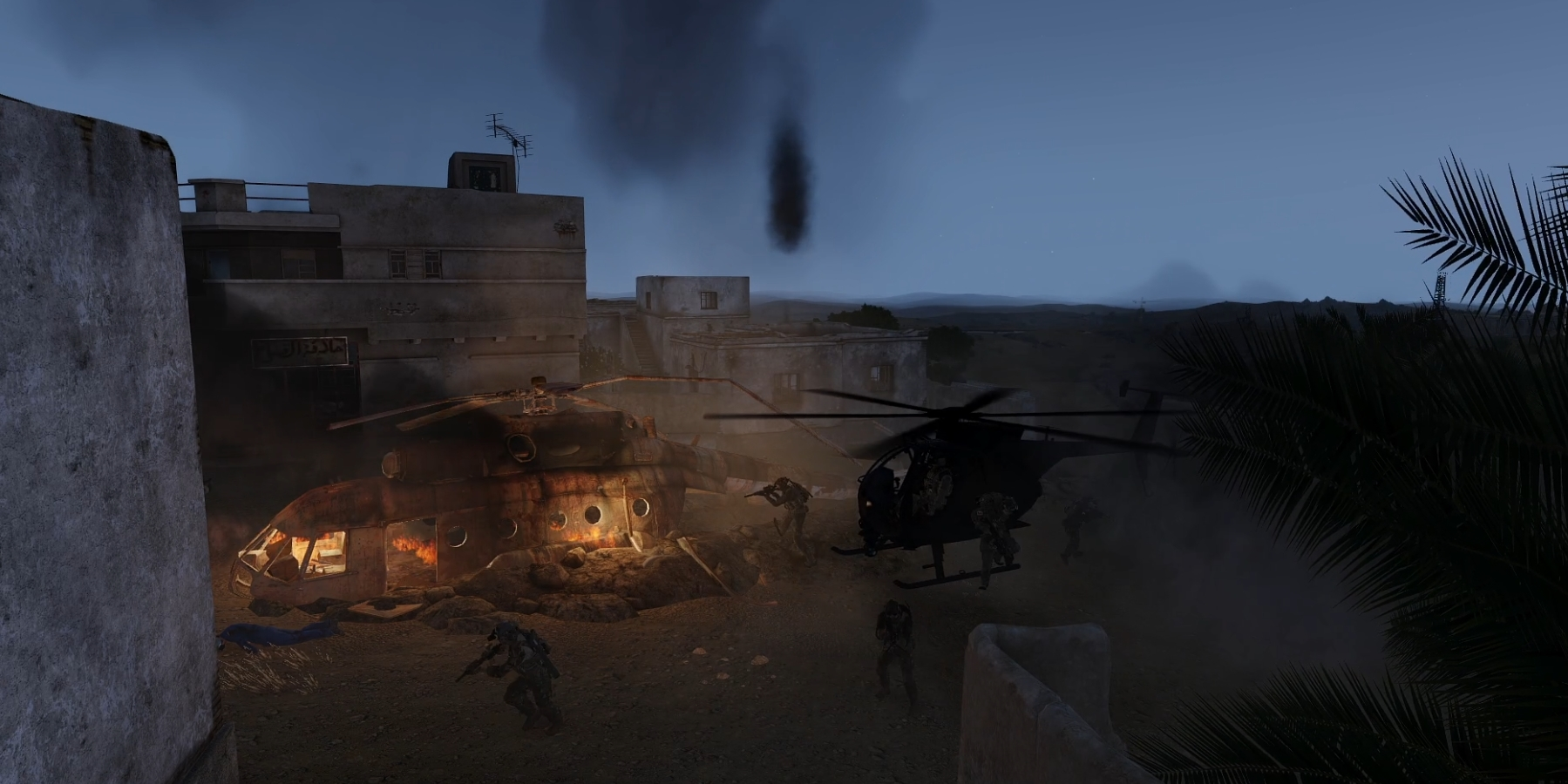
Embassy Evacuated, But Questions Mount After Failed U.S. Special Operations Mission in Guinea The evacuation of the U.S. Embassy in Guinea has been hailed by military officials as a textbook example of crisis response under fire. Yet even as the last American diplomats departed the country aboard Marine helicopters, serious questions are emerging about a separate operation that ended in confusion, casualties, and a strategic setback for U.S. forces. According to multiple defense officials speaking on condition of anonymity, a covert U.S. special operations mission conducted during the final days of the embassy evacuation encountered unexpectedly fierce resistance from pro-government militia forces, resulting in the deaths of several American special forces soldiers and the loss of critical equipment allegedly including a special operations helicopter. The operation's failure stands in stark contrast to the widely praised performance of the 24th Marine Expeditionary Unit (MEU), which successfully executed the rapid evacuation of embassy staff without a single reported casualty. A Successful Evacuation As violence intensified across Guinea following the death of President Sekouba Soumah and the subsequent military coup, Washington ordered the evacuation of diplomatic personnel. The task fell largely to the 24th MEU, deployed offshore aboard an amphibious readiness group positioned in the Gulf of Guinea. Over a period of less than twenty-four hours, Marine helicopters conducted repeated flights between the embassy compound and naval vessels offshore. Security teams established defensive positions around the embassy while Marines escorted diplomats and staff to the extraction helicopters - keeping cool under sporadic fire from the neighboring buildings and streets. Defense officials described the operation as orderly despite growing instability in Guinea. "The Marines executed exactly the mission they were given," one senior Pentagon official said. "They maintained security, extracted personnel, and avoided escalation." By the end of the operation, the embassy had been fully evacuated. A Different Mission At roughly the same time, however, another American operation was unfolding further away inland. According to officials familiar with post-operation reviews, a special operations task force had been deployed to gather intelligence on militia activities and block potential enemy reinforcements to the evacuation site. Instead, the team reportedly encountered a large concentration of fighters affiliated with the Guinean Movement for the Preservation of National Dignity (GMPND), a pro-government militia accused of carrying out attacks against Fulani communities. What happened next remains disputed. Defense officials acknowledge that the special operations soldiers came under heavy fire and were forced into an emergency extraction under hostile conditions. Several aircraft were reportedly diverted from other missions to assist in the recovery effort. Intelligence Failure or Operational Miscalculation? Early assessments suggest planners may have significantly underestimated militia strength in the area. For months, American intelligence agencies had characterized many pro-government militia groups as lightly organized formations possessing little more than small arms and improvised vehicles. But by the time U.S. personnel arrived in the region, militia fighters had apparently established fortified positions, observation posts, and coordinated communications networks. Former military officers reviewing available information have suggested the force may have walked into what amounted to a prepared defensive zone rather than an isolated militia encampment. "The assumption was that these were irregular fighters with limited organization," said one retired special operations commander. "What they encountered appears to have been something much more structured." The Growing Power of Militias The incident highlights a broader challenge facing policymakers attempting to understand Guinea's rapidly evolving conflict. Since the military coup, armed groups have proliferated across the country. While the junta retains formal control of much of the Guinean military, vast rural areas are increasingly dominated by militias, local strongmen, and ethnic self-defense organizations. Several of these groups now possess considerable local intelligence networks and enjoy support from portions of the population. As a result, foreign military forces operating in the region face an environment where traditional assumptions about irregular warfare may no longer apply. "The distinction between militia and local authority is disappearing in some districts," said one regional analyst. "That creates enormous challenges for outside actors." Political Fallout Members of Congress have already requested classified briefings regarding the failed operation. Questions are expected to focus on intelligence preparation, mission objectives, and whether sufficient consideration was given to the rapidly changing conditions on the ground. The Pentagon has declined to discuss specific operational details but confirmed that an after-action review is underway. Meanwhile, military officials continue to point to the embassy evacuation as evidence that American forces successfully achieved their primary objective: the safe removal of U.S. diplomatic personnel from an increasingly dangerous conflict zone. Yet as Guinea's crisis deepens, the contrast between the two missions may become a defining lesson of the intervention. One operation demonstrated the strengths of conventional crisis response under clear objectives and strict command structures. The other revealed the risks of operating in a country where authority has fragmented, information is unreliable, and armed groups are often far stronger than they appear from a distance. For Washington, the embassy is gone, the diplomats are safe, and the Marines have returned to sea. But the conflict that produced the crisis shows no sign of ending. Peter Retchets Grand Central Time
-
- 3
-
-
Mr. Packer, Application accepted. Within the next hour, you will receive new forum permissions which will grant you access to the Welcome Aboard section where there are instructions to get you set up with our modpack. Your next step is to report for In-Processing. This verifies that you can connect to our server and prepares you for attending your first operation with a team. If your mods are installed correctly, it should only take about 20 minutes. You will then begin Assessment & Selection by attending the next available Operation for the team you wish to join. You will be attached to the headquarters element and will be guided through the operation by them. After completing the operation you will report for A&S Phase 2 where any tactical deficiencies will be corrected. If you have prior Military or MilSim experience and are found to be tactically proficient in the required areas, you will skip the second phase of A&S. If the Team HQ feels you are a good fit, you will then be selected and will complete your training with your new team. In Summary: Step 1. Review Welcome Aboard message and follow the Instructions. Step 2. Report for In-Processing. Thank you and once again, welcome, Hospitalman Recruit. Respectfully Submitted, SSgt Waller S-1 Personnel Detachment
-
Mr. Byrne Thank you for your interest in the 3d MRB realism unit. Your application has been denied as it does not follow our guidelines. Respectfully SSgt Waller S-1 Personnel Clerk
-
BREAKING: SECRET US SPECIAL FORCES OPERATION IN GUINEA EXPOSED — GLOBALISTS PANIC AS AMERICAN PATRIOTS STOP MASS SLAUGHTER! THEY LIED TO YOU AGAIN! For THREE WEEKS the corporate media has been running cover for what insiders are now calling the “Guinea Collapse Event” — a total implosion of the Guinean state triggered by CIA-backed coup factions, foreign mercenary networks, and transnational NGOs tied directly to the Brussels-Langley banking cartel. You think I’m joking? WHY are military satellites being repositioned over West Africa? WHY did encrypted traffic between NATO command nodes spike 800% overnight? WHY are unmarked cargo aircraft landing in neighboring countries with transponders disabled? Because this isn’t “civil unrest,” folks. THIS IS A LIVE EXPERIMENT! Sources embedded inside intelligence contracting groups tell us the situation on the ground has devolved into full ethnic extermination campaigns carried out by heavily armed militia factions using imported weapons that somehow magically crossed six borders without a single UN inspection team noticing. OH WOW! WHAT A COINCIDENCE! And now the same people who told you “nothing is happening” are suddenly evacuating diplomats under cover of darkness while special operations teams conduct unauthorized extraction missions deep inside contested territory. BUT HERE’S THE REAL STORY THEY DON’T WANT YOU TO HEAR! American operators reportedly discovered entire foreign civilian communities as well as foreign aid workers trapped behind militia checkpoints while these international aid organizations refused to intervene because acknowledging the massacres would “destabilize regional messaging frameworks.” THAT’S A REAL TERM THEY USE. “MESSAGING FRAMEWORKS.” Human beings are being butchered while bureaucrats in air-conditioned compounds argue over public relations optics and diversity briefing documents. Meanwhile, global media outlets are under direct pressure to suppress reports of targeted killings because it would “complicate the geopolitical narrative.” In other words: the truth is bad for business. And who’s funding this chaos? Follow the money. Mineral conglomerates. Private military contractors. Cryptocurrency laundering pipelines. Defense lobbyists. The same supranational think tanks that engineered disasters across Eastern Europe, the Middle East, and South America for thirty straight years. THEY CREATE THE CRISIS! THEN THEY SELL THE SOLUTION! But something went wrong in Guinea. According to leaked chatter from intelligence circles, US special forces on the ground began disobeying containment directives after witnessing atrocities firsthand. Instead of merely extracting embassy personnel, operators allegedly started moving civilians through covert evacuation corridors against direct recommendations from international “observers.” Translation? Patriots inside the machine saw the horror and decided they weren’t going to sit there while innocents got fed into the grinder for another globalist regime-change operation. They are putting an end to the white Genocide in Guinea. And when they come back they'll put an end to the white genocide happening in our country for they now have seen the truth! But for now the Deep State is furious. WHY do you think the media suddenly stopped talking about Guinea entirely? WHY are social media posts disappearing? WHY are independent journalists getting shadowbanned the moment they mention militia atrocities? Because the narrative collapsed. The elites wanted another controlled destabilization event they could exploit for resources, surveillance expansion, and regional dependency. Instead, the situation spun out of control and exposed the entire rotten system. This is what the New World Order looks like in practice: manufactured collapse, resource extraction, mass displacement, and information warfare designed to make you doubt your own eyes. Today it’s Guinea. Tomorrow it’ll be somewhere else. And while the technocrats lecture you about democracy and humanitarian values, black-budget aircraft are flying through African night skies carrying people out of kill zones the media pretends don’t exist. WAKE UP SHEEPLE! The battle is no longer left versus right. It’s humanity versus the machine. And the machine is getting desperate. Jones Alex, Databattles - because there is a battle for your mind!
-
- 4
-
-
-
-
FIELD ASSESSMENT MEMORANDUM Guinea Internal Conflict Escalation Restricted Distribution / Immediate Release to 3d MRB S-2 Intelligence FROM: Mr. Black TO: West Africa Desk DATE: 09OCT25 SUBJECT: Escalating Ethnic Killings Conducted by Pro-Government Militias in Central Guinea Recent intelligence gathering from central Guinea indicates a rapid escalation in organized ethnic violence targeting Fulani civilian populations in areas under partial control or influence of pro-government militia formations aligned with the ruling GGNS military junta. Multiple independent local sources, humanitarian contacts, and intercepted communications suggest militia units associated with the Guinean Movement for the Preservation of National Dignity (GMPND) have conducted coordinated clearing operations in villages surrounding the prefecture of Al Quisa and surrounding prefectures. The operations appear designed not merely to suppress insurgent activity, but to collectively punish communities suspected of sympathizing with Fulani armed resistance groups. Civilian Killings Witness testimony collected over the last 48 hours describes: House-to-house searches targeting Fulani families Forced disappearances of adult males Execution-style killings near temporary militia checkpoints Destruction of livestock reserves and grain storage Systematic burning of abandoned villages Several survivors reported militia fighters accusing civilians of “harboring traitors” and “protecting enemies of Guinea.” The majority of reporting attributes operational leadership in the region to militia commander Hassan-Brahim Zambo, a former local security organizer who has emerged as one of the most influential pro-junta militia leaders outside the capital. Zambo reportedly commands several hundred irregular fighters operating alongside sympathetic local security personnel. Witnesses consistently describe his forces as highly mobile, lightly motorized, and operating with apparent confidence that they will not face intervention from state authorities. Mass Grave Allegations Three separate local contacts reported the discovery or construction of suspected mass burial sites near abandoned settlements north of Al Quisa. One site was corrobated by preleminary on the ground intelligence gathering by CIA field operatives and 3d MRB personnel. Satellite review remains inconclusive due to terrain and vegetation cover, but imagery analysts identified multiple areas of disturbed earth consistent with hurried excavation activity near militia-controlled road corridors for the other sites. One source described civilians being forced at gunpoint to dig trenches before being transported away in yellow trucks. The final disposition of those detainees remains unknown. Exact casualty figures cannot currently be verified. However, humanitarian estimates suggest the number of civilians killed in recent anti-Fulani operations may already be in the high hundreds. The violence is expected to rise and the casualty numbers will increase accordingly without intervention. Information Environment State-aligned broadcasters and pro-junta political figures continue amplifying rhetoric linking Fulani communities broadly to “terrorism,” “treason,” and alleged responsibility for the death of President Sekouba Soumah. A fulani helicopter mechanic has been publicly executed for treason in the death of the president. There is no intelligence corroborating these claims. This messaging appears to be contributing directly to militia mobilization and retaliatory violence. The distinction between armed insurgents and civilians is increasingly absent from public security discourse. Several regional observers warn the conflict is beginning to exhibit characteristics associated with early-stage mass atrocity environments: Ethnic scapegoating Militia decentralization Dehumanizing propaganda Population displacement Informal detention networks Collective punishment operations Assessment Current trends suggest the junta may be either unwilling or unable to restrain aligned militia actors operating in rural areas. The emergence of Hassan-Brahim Zambo as a prominent field commander is particularly concerning due to: His growing regional influence Apparent operational autonomy Use of ethnically targeted rhetoric Expanding recruitment networks among nationalist youth groups Absent meaningful external pressure or internal fragmentation within the junta, further escalation against Fulani civilian populations is likely. The situation is increasingly moving beyond counterinsurgency dynamics toward organized communal violence. Outlook If current militia operations continue unchecked, Guinea risks entering a self-sustaining cycle of ethnic reprisals and mass displacement. The greatest immediate danger is that localized killings evolve into normalized regional cleansing campaigns carried out under the justification of restoring national security. At present, fear — rather than formal state authority — is becoming the primary governing force across large sections of the interior.
-
- 2
-
-
RÉPUBLIQUE FRANÇAISE DIRECTION GÉNÉRALE DE LA SÉCURITÉ EXTÉRIEURE CLASSIFICATION: TRÈS SECRET EYES ONLY — PRÉSIDENT DE LA RÉPUBLIQUE / NATIONAL SECURITY ADVISORS / CEMA (Chef d'État-Major des Armées) FROM: Directeur Général de la Sécurité Extérieure TO: Président de la République SUBJECT: Guinean Transitional Council Allegations and Regional Operational Assessment DATE: October 9th, 2025 Mr. President, Following the public accusations issued by the Guinean Transitional Military Council, I can formally confirm that the allegations directed toward the French Republic, the DGSE, and associated humanitarian organizations are false and unsupported by any operational record available to this Directorate. France is not conducting offensive intelligence, destabilization, or paramilitary operations within Guinea. No French personnel have participated in hostile actions against Guinean military forces, and no authorized operation exists aimed at undermining the current transitional government through covert action or armed intervention. The accusations concerning IDAP are likewise without factual basis. Current reporting indicates the organization has operated primarily in a humanitarian and logistical support role within affected civilian sectors. We have identified no evidence that IDAP facilities knowingly supported espionage operations or armed militant activity under French direction. Our assessment remains that the Guinean leadership is intentionally weaponizing anti-French sentiment to consolidate domestic authority amid worsening internal instability, insurgent violence, and international isolation. The invocation of “colonial restoration” narratives appears specifically designed to mobilize nationalist sentiment while legitimizing emergency security measures and the detention of foreign personnel. The junta’s decision to classify all IDAP personnel and affiliated aid workers as potential spies significantly increases the likelihood of arbitrary detention operations and forced confessions intended for state media exploitation. That said, several operational details surrounding the checkpoint engagement warrant close scrutiny. The two deceased foreign nationals described by Guinean authorities do not correspond to any known DGSE personnel, assets, or partner operatives currently assigned to the region. All French intelligence personnel operating within West Africa remain fully accounted for. Furthermore, military descriptions of the individuals involved — including advanced encrypted communications equipment, tactical mobility, weapons handling standards, and extraction-oriented logistical preparation — are inconsistent with current French clandestine operating doctrine in the region. Signals intercepts collected during the forty-eight hours preceding the incident identified communications patterns in southern Guinea bearing stronger resemblance to American special mission support architectures than to any known French intelligence framework presently active in West Africa. Additional indicators include irregular aerial traffic activity across neighboring states, increased offshore military posture in the Gulf of Guinea, and unusual compartmentalized communications routing associated with Western security elements operating outside established NATO coordination mechanisms. While no definitive conclusion can yet be established, available intelligence suggests the possibility that unilateral American contingency operations may have been underway independently and without prior consultation with French regional partners. The Guinean government’s immediate exploitation of the incident appears intended to remove foreign observers from contested areas before broader domestic security operations commence. The military seizure of aid compounds and communications infrastructure will likely reduce independent visibility into civilian casualty events and counterinsurgency actions over the coming weeks. Recommendations follow: Publicly reject all Guinean accusations in unequivocal diplomatic terms. Avoid direct public speculation regarding possible American involvement while pursuing urgent clarification through liaison channels. Coordinate with European and ECOWAS partners regarding the unlawful detention risk facing humanitarian personnel. Accelerate contingency evacuation planning for French nationals remaining inside Guinea. Increase intelligence surveillance coverage over Gulf of Guinea air corridors and adjacent regional logistics routes. Prepare for expanded information operations portraying France as the architect of regional destabilization and neo-colonial interference. At present, our assessment is that the Transitional Military Council is operating from a position of escalating paranoia compounded by fragmented battlefield awareness and mounting international isolation. Additional expulsions, detentions, and anti-Western propaganda operations remain highly probable in the immediate term. Respectfully, Admiral Laurent Delorme Directeur Général Direction Générale de la Sécurité Extérieure
-
- 2
-
-
FOR IMMEDIATE RELEASE TRANSITIONAL MILITARY COUNCIL OF THE REPUBLIC OF GUINEA OFFICE OF NATIONAL SECURITY AND SOVEREIGN INTEGRITY The Transitional Military Council announces that Guinean security forces operating near Jableh have eliminated two armed foreign operatives linked to an illegal French intelligence network operating inside the Republic of Guinea. The individuals ignored repeated orders to surrender and opened hostilities while attempting to cross into a restricted military security corridor. Both were neutralized by Guinean forces. Weapons, encrypted communications equipment, forged identification papers, and intelligence materials recovered at the scene confirm direct foreign involvement in ongoing destabilization efforts against the Guinean state. Preliminary investigations conducted by military intelligence indicate that the so-called International Development Assistance Program (IDAP) has been operating as a covert French proxy organization under the false cover of humanitarian work. Evidence suggests IDAP personnel have coordinated with French intelligence officers to gather military intelligence, transport illegal communications equipment, conceal armed actors inside aid compounds, and support efforts to undermine Guinea’s lawful transitional government. The Transitional Military Council further believes these operations are part of a broader French campaign to restore foreign political influence and re-establish colonial domination over Guinea through espionage, economic sabotage, disinformation, and armed subversion. Over the last twenty-four hours, multiple Guinean servicemen have been killed in attacks conducted near IDAP-controlled facilities and foreign aid encampments. Military investigators are examining direct connections between these attacks and French-backed operatives currently active inside the country. Accordingly, the following emergency security measures are now in effect nationwide: The French Ambassador is declared persona non grata and must leave Guinea within 24 hours. All French diplomatic, intelligence, and military personnel are ordered to depart Guinean territory immediately. All IDAP operations within Guinea are suspended indefinitely. Any individual employed by, cooperating with, or providing support to IDAP will be detained pending counterintelligence investigation. IDAP compounds, vehicles, warehouses, and communications infrastructure are now under military control. Foreign NGOs operating inside Guinea will undergo immediate security review and inspection. Expanded counterintelligence and border security operations are now authorized nationwide under emergency wartime authority. The Transitional Military Council warns all foreign governments against interference in Guinea’s internal affairs. Any nation found supporting armed groups, espionage networks, or attempts to destabilize the republic will face decisive retaliation. Guinea will never again submit to foreign occupation, foreign manipulation, or colonial control disguised as humanitarian assistance. The people of Guinea are urged to remain vigilant against foreign agents, collaborators, and disinformation campaigns designed to weaken national unity and sovereignty. Suspicious activity should be reported immediately to the nearest military authority. Issued on behalf of the Transitional Military Council General Sékouba Camara Conakry, Republic of Guinea
-
- 2
-
-
Guinea: President Soumah Dead - Military Seizes Power as Ethnic Violence Escalates Guinea’s government collapsed into chaos Tuesday following the sudden death of President Sekouba Soumah in a helicopter crash that has already triggered a military coup, widespread unrest, and growing fears the West African nation could slide toward ethnic civil conflict. Within hours of state media confirming Soumah’s death, armored vehicles and heavily armed soldiers appeared across the capital of Conakry. Key intersections, government ministries, telecommunications centers, and the national broadcaster were quickly occupied by military forces loyal to a newly declared ruling body calling itself the Guinean Government of National Salvation (GGNS). In a televised statement broadcast shortly after midnight local time, junta leader General Mamadou Kante announced the suspension of the constitution, dissolution of parliament, closure of national borders, and imposition of nationwide martial law. “The Republic has been betrayed from within,” Kante declared while flanked by armed officers. “The armed forces will restore order, unity, and national dignity.” The military government immediately blamed “Fulani extremist elements” for the president’s death, though no evidence has been publicly presented linking any organization or ethnic group to the helicopter crash. Violence Spreads Following Coup Across multiple regions of Guinea, reports are emerging of armed mobs, militia checkpoints, and targeted attacks against Fulani communities following the junta’s announcement. Witnesses in Kankan, Labé, and several smaller rural towns reported gunfire, looting, and violent clashes overnight between pro-government militias and armed Fulani groups. Entire neighborhoods in some mixed communities reportedly emptied within hours as civilians fled amid rumors of reprisals. Local sources describe scenes of panic on major roads leading out of interior towns, with thousands attempting to reach safer areas before additional checkpoints are established. Diplomatic officials and humanitarian organizations warn the situation is deteriorating rapidly. “The danger here is acceleration,” one Western security analyst currently monitoring the region told Grand Central Times. “Once a state begins framing an entire ethnic population as connected to terrorism or national betrayal, local violence can spread extremely fast — especially where armed militias already exist.” Crash Raises Questions The exact cause of Soumah’s helicopter crash remains unknown. According to preliminary government statements issued before the coup, the president had been traveling through underdeveloped eastern provinces as part of a regional infrastructure and security tour. Communication with the aircraft was lost and the wreckage was later located in remote terrain near the forest frontier. No survivors were found. Even before the military takeover, conspiracy theories surrounding the crash had already begun circulating widely online and through local radio broadcasts. Since seizing power, junta officials have repeatedly implied the crash was an assassination rather than an accident. Independent verification has not been possible. Western intelligence officials privately caution that the military may be using the uncertainty surrounding the president’s death to justify consolidating power and rallying nationalist support. President Soumah boarding the helicopter in question earlier this week. Guineas government has two one helicopter for high level officials to use. Military Moves Fast Analysts say the speed and coordination of the coup suggest at least elements of Guinea’s armed forces had prepared contingency plans well before Soumah’s death. Within hours of the crash announcement military units secured the presidential palace, telecommunications infrastructure was seized, airport access was restricted, senior civilian officials reportedly disappeared or were detained and curfews were imposed in major cities. The GGNS now appears to control most formal military assets in the country, including mechanized units, artillery forces, and air assets concentrated around Conakry and several regional centers. But beyond the urban centers, the situation is far less clear. Militias and Ethnic Polarization For years, Guinea’s worsening ethnic divisions had raised concerns among regional observers and foreign security analysts. The country’s political system had become increasingly polarized between Fulani political networks, Mandinka elites, and Susu power brokers tied to state institutions and sections of the military. In rural areas where state authority remained weak, communal defense groups gradually evolved into armed militias. Now, many of those militias appear to be mobilizing openly. The Guinean Movement for the Preservation of National Dignity (GMPND), a pro-government militia drawing support largely from Mandinka and Susu communities, has reportedly established checkpoints and patrols alongside sympathetic security forces in several regions. Opposing them is the National Movement for the Liberation of the Fulani People (NMLFP), an anti-government armed network claiming to defend Fulani civilians from persecution and retaliatory violence. Security experts fear the conflict may evolve less as a conventional military confrontation and more as decentralized ethnic violence spreading through villages and provincial towns. A fulani held checkpoint in the interior of Guinea, where government control is weak. Americans and Foreign Nationals at Risk The deteriorating security situation has raised urgent concerns for foreign nationals and international business operations throughout Guinea. The country remains one of the world’s most important exporters of bauxite, critical for global aluminum production, and hosts major Western, Chinese, and multinational mining investments. Several foreign corporations have reportedly begun emergency evacuation planning for expatriate workers and contractors. U.S. officials have not announced any military action, but sources familiar with contingency discussions say Washington is closely monitoring the safety of American citizens and diplomatic personnel in the region. The State Department is expected to update their travel advisory for Guinea soon. International Community Reacts Carefully Governments across Europe and North America have condemned the coup while calling for restraint and civilian protection. But behind closed doors, officials increasingly fear Guinea could become the latest example of how quickly fragile political systems can unravel after the sudden removal of a central authority figure. The memory of past ethnic mass-violence events across Africa continues to shape diplomatic thinking as reports of identity-based targeting multiply. Several regional governments have already begun discussing border security and potential refugee contingencies should the violence continue escalating. The Things To Come For now, Guinea remains in a state of profound uncertainty. The junta controls the capital and much of the formal military structure. But in large parts of the countryside, armed groups, frightened civilians, and local power brokers are increasingly shaping events faster than the central government can respond. The death of Sekouba Soumah did not create Guinea’s divisions. But it may have detonated them. As night falls across Conakry under military patrols and curfews, the greatest fear among diplomats and security officials is no longer simply political instability. It is that Guinea may be crossing the line between coup and catastrophe. Peter Rechets, Ground Correspondent Grand Central Times
-
- 1
-
-
From: [email protected] To: [email protected] CC: EVP Africa Operations, General Counsel INTERNAL / CONFIDENTIAL Understood. To answer your first question directly: I believe the probability of significant instability is now materially higher than at any point in the last decade. The concern is less about a coordinated insurgency and more about state fragmentation. The Guinean government still controls the cities, but outside the urban corridors authority is becoming increasingly negotiated between local military officers, ethnic networks, and informal armed groups. Once that process accelerates, incidents that would normally remain isolated can spread extremely quickly. The mining sector is especially exposed because: We are geographically fixed We rely on vulnerable transit infrastructure We employ large numbers of foreign nationals We are associated — fairly or unfairly — with state elites and foreign influence Regarding deterrence: I am not proposing a paramilitary occupation of our sites. The recommendation would be a low-visibility but highly capable contractor presence consisting primarily of former military personnel providing: Hardened perimeter security Discreet overwatch teams Route reconnaissance Emergency extraction capability Executive protection for senior staff movement The point is not to fight militias. The point is to convince militias that attacking us would be costly, complicated, and unlikely to succeed. Right now, we are visibly vulnerable. That perception matters. I’ll have the full assessment package prepared before EOD. Philippe Kind regards Philippe de Hautcloq Global Risk Assessment Director D +41 41 709 20 20 E-mail: [email protected] Glencore AG - Energizing today, Advancing tomorrow Baarermatstrasse 3 6340 Baar Switzerland ------------------------------------------------------------------------- From: [email protected] To: [email protected] CC: EVP Africa Operations, General Counsel INTERNAL / CONFIDENTIAL Hi Philippe Understood. I want hard clarity on two issues before we move further: Are we talking about a genuine threat to operational continuity, or are we overreacting to regional instability that may remain politically contained? What does “visible deterrence” actually look like in practice? The last thing this company needs is photographs circulating online of foreign contractors in armored vehicles outside one of our facilities while opposition politicians accuse us of building a private army. I appreciate the security rationale, but the reputational and legal exposure here could become significant very quickly. Please prepare: A formal threat projection covering the next 90 days Cost estimates Candidate firms Political risk analysis if deployment becomes public Assessment of whether host government approval would be required or merely “encouraged” Also include evacuation timelines for expatriate personnel under worst-case conditions. Let’s review tomorrow morning. Gary Kind regards Gary Nagel Chief Executive Officer D +41 41 709 20 10 E-mail: [email protected] Glencore AG - Energizing today, Advancing tomorrow Baarermatstrasse 3 6340 Baar Switzerland ---- From: [email protected] To: [email protected] CC: EVP Africa Operations, General Counsel INTERNAL / CONFIDENTIAL Hi Gary, Following this week’s field reporting from our regional security chiefs Nzérékoré and Kankan, I need to reiterate my growing concern regarding the trajectory of the security environment in Guinea. The situation remains officially “stable,” but our local contacts, subcontractors, and security personnel are all reporting a marked increase in ethnic hostility, checkpoint activity, and militia mobilization in the interior regions surrounding several of our logistical corridors. Of particular concern: Increased movement of armed community groups along secondary roads used by company convoys Anti-foreign rhetoric spreading through local radio and political youth networks Growing hostility toward mining operators perceived as aligned with the government Reports that local military units are increasingly unreliable outside major urban areas Escalating clashes between Fulani self-defense groups and pro-government militias in rural prefectures At present, our sites remain operational, but the current posture is insufficient if the situation deteriorates further. I strongly recommend we immediately expand our contracted security footprint in-country. Specifically, I propose engaging a reputable private military/security contractor capable of rapidly deploying: Static site security Convoy escort teams Aviation security detachments Intelligence and surveillance personnel Crisis response / extraction capabilities for expatriate staff To be clear, this would not be an offensive deployment. The objective is deterrence. Right now, local militias view corporate infrastructure and foreign personnel as soft targets. A visible, professional security presence would significantly reduce the likelihood of opportunistic attacks, kidnappings, sabotage, or labor unrest escalating into direct violence against company personnel. We are approaching the point where waiting for a triggering event may leave us reacting instead of shaping the environment. I recommend we discuss this urgently before the board call on Friday. Philippe Kind regards Philippe de Hautcloq Global Risk Assessment Director D +41 41 709 20 20 E-mail: [email protected] Glencore AG - Energizing today, Advancing tomorrow Baarermatstrasse 3 6340 Baar Switzerland
-
- 2
-
-
Guinea: The Slow Fracturing of a Fragile State Beneath the Surface of Stability From the ministries of Conakry, Guinea still presents the appearance of continuity. The state functions, the ports remain open, ministers continue to speak the language of republican unity, and President Sekouba Soumah regularly assures foreign partners that the country is stable despite "localized disturbances" in the interior. Yet beyond the capital, another reality is taking shape. Across the forested southeast and the dry central highlands, the authority of the Guinean state has gradually thinned under the combined pressure of economic stagnation, corruption, rural neglect, and the politicization of ethnic identity. What appears externally as a manageable security situation increasingly resembles a slow-moving national fracture. In provincial towns, rumors circulate more quickly than official communiqués. Roadblocks appear overnight along secondary roads. Traders travel in convoys for protection. Young men gather around improvised checkpoints carrying hunting rifles and old Kalashnikovs inherited from earlier regional wars. Local administrators continue to fly the national flag above municipal offices, but many exercise only symbolic authority once night falls. The central government insists these tensions are temporary disturbances aggravated by criminality and smuggling networks. But within diplomatic and military circles, concern has grown that Guinea may be entering a dangerous pre-crisis phase in which ethnic polarization and state weakness begin reinforcing one another. Ethnicity and the Architecture of Power Guinea’s political system has long rested upon a fragile ethnic balancing act: The Fulani populations of central Guinea, historically influential in commerce and religious networks, have for decades accused successive governments of systematic political exclusion despite their demographic weight. Meanwhile, Mandinka elites tied to military and administrative structures remain influential in the east, while Susu political networks dominate significant portions of the coastal economy and state bureaucracy. Official discourse rarely acknowledges these divisions directly. Publicly, the government continues to promote a rhetoric of national cohesion inherited from the post-independence era. In practice, however, political loyalty, military appointments, public contracts, and regional development projects are increasingly interpreted through an ethnic lens. This perception has deepened over the past several years as economic conditions worsened. Outside the mining enclaves that generate Guinea’s immense mineral wealth, unemployment remains severe, infrastructure deteriorates rapidly beyond major urban centers, and access to public services is inconsistent. In many rural prefectures, the state exists primarily as a distant tax collector accompanied by poorly paid security forces. The resulting frustration has strengthened local identity networks at the expense of national institutions. Checkpoint manned by government forces in the capital as security measures have been ramping up the last couple days. The Militarization of Rural Society In large parts of the countryside, insecurity no longer derives solely from banditry. Communal self-defense groups — initially organized to protect villages, livestock corridors, and trade routes — have multiplied across several regions of the country. Though lightly armed, these organizations increasingly function as parallel security structures beyond meaningful state control. Some maintain informal relations with local military officers or provincial officials. Others operate independently but enjoy tacit political protection because they serve as useful instruments of territorial influence. Among Mandinka and Susu communities, pro-government groups frame themselves as defenders of national stability against what they describe as "separatist agitation" and "foreign-inspired destabilization." Within Fulani regions, local protection networks increasingly portray themselves as shields against state repression and ethnic intimidation. Each side describes its mobilization as defensive. Each interprets the mobilization of the other as preparation for aggression. The circulation of weapons throughout the region has accelerated this dynamic. Arms trafficked through neighboring conflict zones in Sierra Leone, Liberia, and Mali continue to move through Guinea’s porous borders. Old insurgent supply routes, dormant for years, are once again active. The Guinean state retains formal military superiority. Yet in many isolated districts, local officials privately acknowledge that security now depends less on national institutions than on negotiated coexistence between rival armed networks. Local port official being enticed to accelerate permits. A Government Increasingly Dependent on Force President Soumah’s administration has responded to rising unrest through a familiar combination of limited reform promises and expanding security measures. Military patrols have intensified in several interior regions. Opposition activists and community organizers accuse the government of arbitrary detentions and selective enforcement operations disproportionately targeting Fulani areas. State media, meanwhile, increasingly warns against "extremist elements" and "anti-national actors" allegedly seeking to destabilize the republic. The language remains deliberately ambiguous. But ambiguity itself has become politically useful. By blurring the distinction between armed militants, political opposition, and broader Fulani grievances, sections of the political establishment have gradually normalized a security narrative in which ethnic suspicion becomes intertwined with state preservation. At the same time, divisions are reportedly emerging within Guinea’s own military apparatus. Senior officers remain publicly loyal to the presidency, but younger commanders frustrated by corruption, poor logistics, and deteriorating field conditions increasingly question the government’s ability to maintain control if unrest spreads further. For now, these tensions remain contained within barracks conversations and intelligence reporting. Yet in many postcolonial states, the line separating military dissatisfaction from political intervention has historically proven thin. The Foreign Presence and the Return of Suspicion The deterioration of Guinea’s internal climate has also altered perceptions of foreign actors. Western mining firms, aid organizations, and diplomatic missions continue operating throughout the country, particularly in regions tied to bauxite and mineral extraction. But among segments of the population — especially younger urban activists — foreign involvement is increasingly viewed through the language of exploitation and covert influence. On local radio programs and social media networks, accusations circulate that foreign governments manipulate Guinea’s political system to secure access to strategic resources. Conspiracy narratives flourish most easily where state legitimacy has weakened. Several incidents involving harassment of foreign workers and aid personnel have already been reported in rural areas where armed groups exercise growing influence. Although these confrontations remain isolated, security analysts warn that in highly polarized environments, anti-foreign sentiment can spread rapidly once violence escalates. A convoy carrying bauxite and it's security awaiting permission to unload at the docks. A State Approaching the Threshold Guinea has not yet descended into open conflict. The institutions of the state continue to function. The military remains formally unified. Commercial activity persists in the capital. Most citizens continue their daily lives outside the rhythms of political crisis. Yet the country increasingly exhibits the warning signs common to states approaching systemic rupture: declining trust in institutions, growing reliance on communal armed structures, the politicization of ethnicity, and a governing elite that responds to fragmentation primarily through securitization. What makes such situations dangerous is not simply the existence of tension, but the unpredictability of the event that ultimately ignites it. For now, Guinea remains suspended between uneasy stability and the possibility of rapid collapse. But beneath the official language of order and national unity, the foundations of the state are beginning to shift. Revue Diplomatique Rachid Benyamina – North Africa and Sahel specialist
-
- 1
-
-
Mr. Mucu, Thank you for your interest in the 3d MRB Realism Unit. Unfortunately we are unable to process your application at this time, as we do not allow Dual Clanning. Respectfully submitted, SSgt Waller S-1 Personnel Detachment
-
Mr. Daniels, We appreciate your application to the 3d MRB Realism Unit but, as our application message states, we have an age requirement here so we are unable to approve your application. You are welcome to re-apply when you meet our current age requirement. Thank you for your interest. Respectfully Submitted, SSgt Waller S-1 Personnel Detachment
-
Mr. Foster, Application accepted. Within the next hour, you will receive new forum permissions which will grant you access to the Welcome Aboard section where there are instructions to get you set up with our modpack. Your next step is to report for In-Processing. This verifies that you can connect to our server and prepares you for attending your first operation with a team. If your mods are installed correctly, it should only take about 20 minutes. You will then begin Assessment & Selection by attending the next available Operation for the team you wish to join. You will be attached to the headquarters element and will be guided through the operation by them. After completing the operation you will report for A&S Phase 2 where any tactical deficiencies will be corrected. If you have prior Military or MilSim experience and are found to be tactically proficient in the required areas, you will skip the second phase of A&S. If the Team HQ feels you are a good fit, you will then be selected and will complete your training with your new team. In Summary: Step 1. Review Welcome Aboard message and follow the Instructions. Step 2. Report for In-Processing. Thank you and once again, welcome, Private. Respectfully Submitted, SSgt Waller S-1 Personnel Detachment
-
Mr. Drost Application accepted. Within the next hour, you will receive new forum permissions which will grant you access to the Welcome Aboard section where there are instructions to get you set up with our modpack. Your next step is to report for In-Processing. This verifies that you can connect to our server and prepares you for attending your first operation with a team. If your mods are installed correctly, it should only take about 20 minutes. You will then begin Assessment & Selection by attending the next available Operation for the team you wish to join. You will be attached to the headquarters element and will be guided through the operation by them. After completing the operation you will report for A&S Phase 2 where any tactical deficiencies will be corrected. If you have prior Military or MilSim experience and are found to be tactically proficient in the required areas, you will skip the second phase of A&S. If the Team HQ feels you are a good fit, you will then be selected and will complete your training with your new team. In Summary: Step 1. Review Welcome Aboard message and follow the Instructions. Step 2. Report for In-Processing. Thank you and once again, welcome, Private. Respectfully Submitted, SSgt Waller S-1 Personnel Detachment
-
Mr. Blackwood, Application accepted. Within the next hour, you will receive new forum permissions which will grant you access to the Welcome Aboard section where there are instructions to get you set up with our modpack. Your next step is to report for In-Processing. This verifies that you can connect to our server and prepares you for attending your first operation with a team. If your mods are installed correctly, it should only take about 20 minutes. You will then begin Assessment & Selection by attending the next available Operation for the team you wish to join. You will be attached to the headquarters element and will be guided through the operation by them. After completing the operation you will report for A&S Phase 2 where any tactical deficiencies will be corrected. If you have prior Military or MilSim experience and are found to be tactically proficient in the required areas, you will skip the second phase of A&S. If the Team HQ feels you are a good fit, you will then be selected and will complete your training with your new team. In Summary: Step 1. Review Welcome Aboard message and follow the Instructions. Step 2. Report for In-Processing. Thank you and once again, welcome, Private. Respectfully Submitted, SSgt Waller S-1 Personnel Detachment
-
Mr. Macedo, Application accepted. Within the next hour, you will receive new forum permissions which will grant you access to the Welcome Aboard section where there are instructions to get you set up with our modpack. Your next step is to report for In-Processing. This verifies that you can connect to our server and prepares you for attending your first operation with a team. If your mods are installed correctly, it should only take about 20 minutes. You will then begin Assessment & Selection by attending the next available Operation for the team you wish to join. You will be attached to the headquarters element and will be guided through the operation by them. After completing the operation you will report for A&S Phase 2 where any tactical deficiencies will be corrected. If you have prior Military or MilSim experience and are found to be tactically proficient in the required areas, you will skip the second phase of A&S. If the Team HQ feels you are a good fit, you will then be selected and will complete your training with your new team. In Summary: Step 1. Review Welcome Aboard message and follow the Instructions. Step 2. Report for In-Processing. Thank you and once again, welcome, Private. Respectfully Submitted, SSgt Waller S-1 Personnel Detachment
-
Mr. Cheng, Application accepted. Within the next hour, you will receive new forum permissions which will grant you access to the Welcome Aboard section where there are instructions to get you set up with our modpack. Your next step is to report for In-Processing. This verifies that you can connect to our server and prepares you for attending your first operation with a team. If your mods are installed correctly, it should only take about 20 minutes. You will then begin Assessment & Selection by attending the next available Operation for the team you wish to join. You will be attached to the headquarters element and will be guided through the operation by them. After completing the operation you will report for A&S Phase 2 where any tactical deficiencies will be corrected. If you have prior Military or MilSim experience and are found to be tactically proficient in the required areas, you will skip the second phase of A&S. If the Team HQ feels you are a good fit, you will then be selected and will complete your training with your new team. In Summary: Step 1. Review Welcome Aboard message and follow the Instructions. Step 2. Report for In-Processing. Thank you and once again, welcome, Private. Respectfully Submitted, SSgt Waller S-1 Personnel Detachment
-
Mr. Dauby Application accepted. Within the next hour, you will receive new forum permissions which will grant you access to the Welcome Aboard section where there are instructions to get you set up with our modpack. Your next step is to report for In-Processing. This verifies that you can connect to our server and prepares you for attending your first operation with a team. If your mods are installed correctly, it should only take about 20 minutes. You will then begin Assessment & Selection by attending the next available Operation for the team you wish to join. You will be attached to the headquarters element and will be guided through the operation by them. After completing the operation you will report for A&S Phase 2 where any tactical deficiencies will be corrected. If you have prior Military or MilSim experience and are found to be tactically proficient in the required areas, you will skip the second phase of A&S. If the Team HQ feels you are a good fit, you will then be selected and will complete your training with your new team. In Summary: Step 1. Review Welcome Aboard message and follow the Instructions. Step 2. Report for In-Processing. Thank you and once again, welcome, Private. Respectfully Submitted, SSgt Waller S-1 Personnel Detachment
-
Mr. Parker, Application accepted. Within the next hour, you will receive new forum permissions which will grant you access to the Welcome Aboard section where there are instructions to get you set up with our modpack. Your next step is to report for In-Processing. This verifies that you can connect to our server and prepares you for attending your first operation with a team. If your mods are installed correctly, it should only take about 20 minutes. You will then begin Assessment & Selection by attending the next available Operation with the 160th SOAR. You will be attached to aviation headquarters and will be guided through the operation by them. After completing the operation you will report for A&S Phase 2 where any tactical deficiencies will be corrected. If you have prior Military or MilSim experience and are found to be tactically proficient in the required areas, you will skip the second phase of A&S. If Aviation HQ feels you are a good fit, you will then be selected and will complete your training with your new team. In Summary: Step 1. Review Welcome Aboard message and follow the Instructions. Step 2. Report for In-Processing. Thank you and once again, welcome, Warrant Officer Candidate. Respectfully Submitted, SSgt Waller S-1 Personnel Detachment